
StealSavings · Prices checked November 2026
Affiliate disclosure: StealSavings may earn a commission when you buy through links in this guide, at no extra cost to you. See our affiliate disclosure page.
The short answer: London is the easiest big city in the world to do cheaply — if you build your trip the right way round. The world-class museums are free (but five of the big six handle entry differently, and getting that wrong costs you hours in queues). The paid icons are worth choosing carefully: at 2026 prices, the Tower of London (£38), Westminster Abbey (£32) and St Paul’s (£27) are the heavy hitters, and stacking them behind a Go City Explorer Pass saves a little — while the headline All-Inclusive pass actually loses money for most budget visitors, as the maths below shows. Viator’s real value is narrower and more useful than its homepage suggests: a £10-ish guided tour of a free museum, free-cancellation tickets, and super-saver day trips. Here’s the whole picture, priced.
Start with the free core — and book it correctly
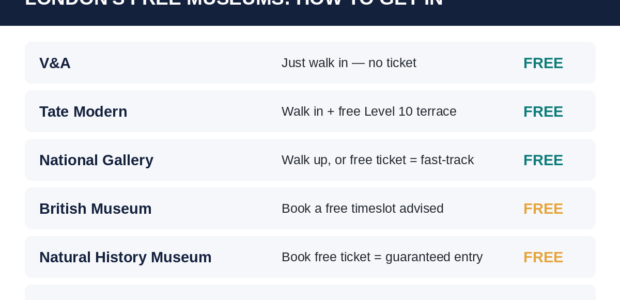
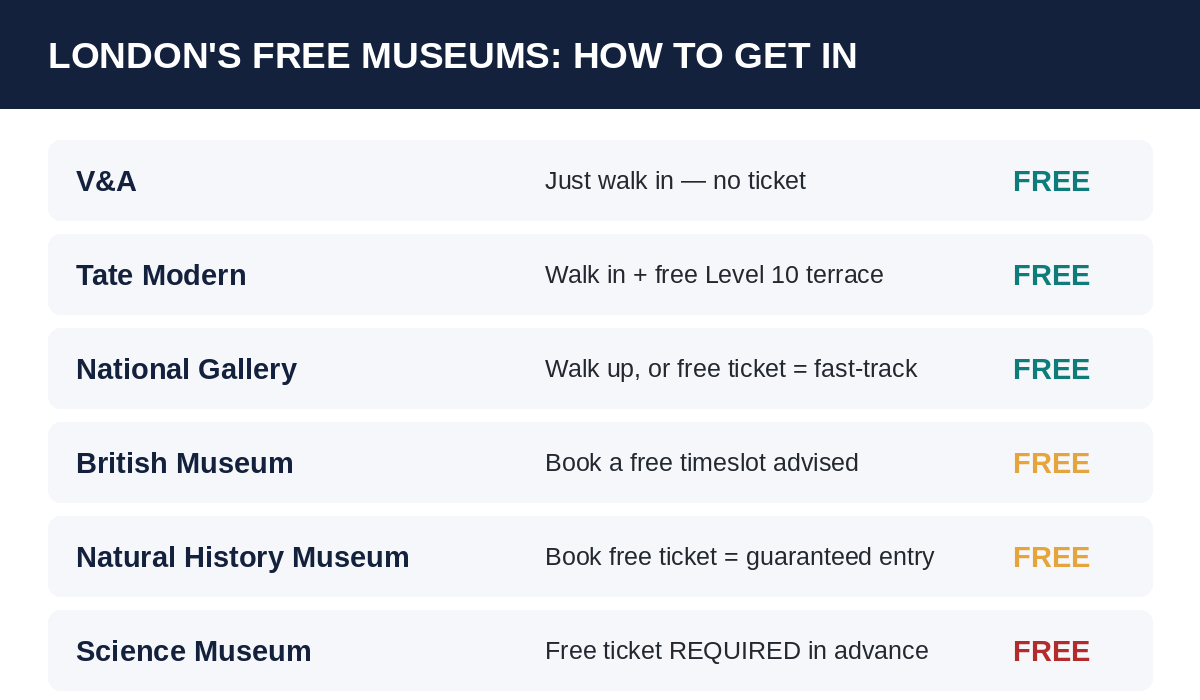
London’s permanent museum collections are free. What’s not uniform is how you get in. Ranked from “just walk in” to “ticket required”:
- V&A (South Kensington) — free, no ticket needed. Walk in.
- Tate Modern — free collection, walk in. (The Level 10 viewing terrace is part of the free visit — one of the best free views in London.)
- National Gallery — free; walk-up entry available, or book a free ticket for fast-track entry.
- British Museum — free, but you’re “advised to book a free ticket in advance” for a timeslot; without one, entry depends on capacity and queues at busy times are expected.
- Natural History Museum — free; book a free ticket in advance for guaranteed entry. At peak times, walk-ins queue and can be turned away.
- Science Museum — the strictest: “You need to book a free ticket before coming.” (Its paid extras — Wonderlab, IMAX — are where it makes money.)
The practical rule: the day you fix your London dates, book your free slots for the British Museum, Natural History Museum and Science Museum. It costs nothing and converts your biggest queue risks into certainties. Charges at all six apply to special exhibitions only.
Which free museum for whom? With limited days, choose by obsession rather than fame. History across civilisations: the British Museum (give it half a day minimum — it’s the one most worth a guided tour, below). Dinosaurs and the building itself: the Natural History Museum, especially with children. Design, fashion and decorative arts: the V&A, the connoisseur’s favourite and the easiest walk-in of the set. Modern art plus the free skyline terrace: Tate Modern. Paintings from Leonardo to Van Gogh, compact enough for two hours: the National Gallery. Hands-on science and engineering with kids: the Science Museum — book the free ticket, decide on the paid Wonderlab only once you’re inside and can see the queues. A realistic budget pace is two major museums a day; they’re free, but your attention isn’t.
Two more free icons with a catch: the Sky Garden viewing deck is free but ticketed, with tickets released three weeks in advance — set a reminder. And Evensong and services at Westminster Abbey and St Paul’s are free to attend — a legitimate, moving way to experience both buildings, with the honest caveat that you’re attending a service, not sightseeing with a guidebook.
The paid icons: 2026 gate prices
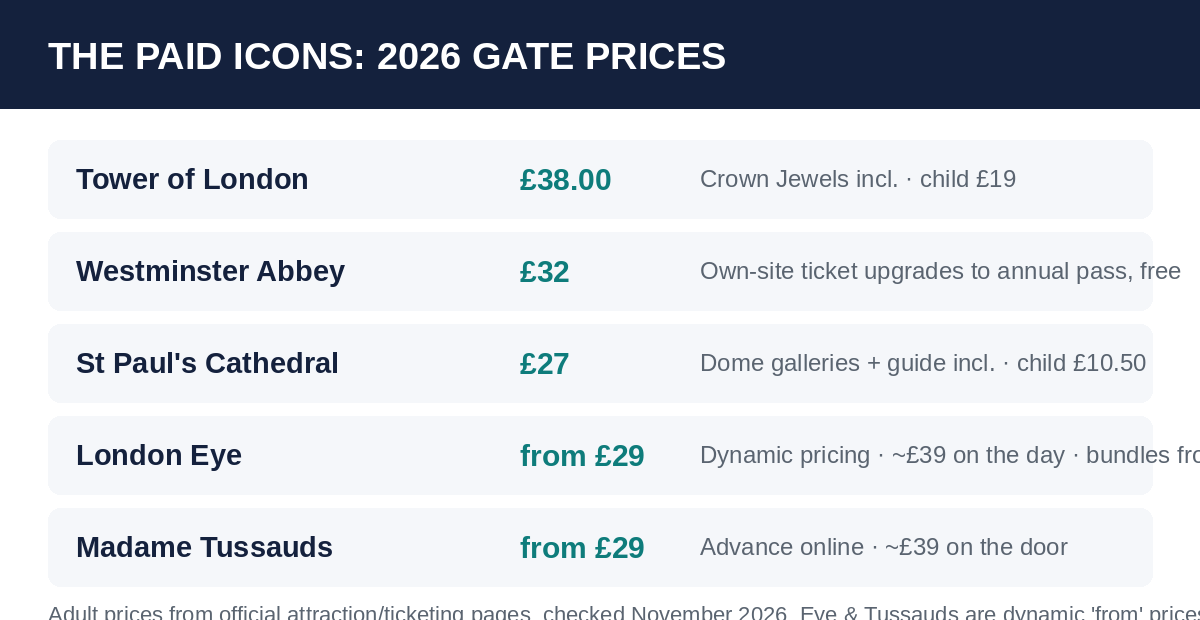
| Attraction | Adult price (official) | Notes |
|---|---|---|
| Tower of London | £38.00 (£41.80 with donation) | Child 5–15 £19; includes Crown Jewels and the Yeoman Warder tour. Ignore older pages quoting £37. |
| Westminster Abbey | £32 | 65+/students £29; children 6–17 £14. Tickets from the Abbey’s own site can be upgraded free to an annual pass. |
| St Paul’s Cathedral | £27 | Child £10.50; includes the Dome galleries and multimedia guide. |
| London Eye | from £29 online | Dynamic, date-based pricing — the on-the-day price is around £39. Official bundles: Eye + Madame Tussauds + SEA LIFE for £54; five attractions for £59. Non-refundable direct, but rescheduling is free via the booking portal. |
| Madame Tussauds | from £29 in advance | Roughly £39 on the door; dynamic pricing by date. |
Three icons done properly will fill a day and cost £97 at the gate (Tower + Abbey + St Paul’s). That number matters — it’s the benchmark every pass has to beat.
The best orientation in London is (nearly) free: tip-based walking tours
Your first morning in a new city is worth a guided walk, and London’s tip-based tours are the budget institution: you reserve free online, and pay the guide what you think the tour was worth at the end. Operators with proper London programmes include Strawberry Tours (nine free tours — Westminster, Harry Potter, Jack the Ripper and more) and Free Tours by Foot, with GuruWalk listing further local guides. Two honest notes: the tip is the guide’s income, so budget one — this is “pay what you like”, not “free”. And you won’t find these tours on Viator; they’re booked direct with the operators.
Where Viator actually helps a budget traveller
Viator runs a dedicated “Sightseeing on a Budget in London” collection, and most of it is ordinary reselling. The genuinely useful parts:
- A guided tour of a free museum, from $13. Viator lists a British Museum Guided Tour with Priority Entry from $13 (free cancellation) — roughly the price of lunch for a guide in a museum that defeats unguided visitors by sheer size. The discipline: you’re paying for the guiding, never for entry. Entry is free, booked direct at britishmuseum.org; anyone selling you “British Museum entry” is selling you a £0 product.
- Free-cancellation tickets for the icons. The same Tower and Abbey tickets appear on Viator (from $48 and $42 as displayed in USD), and many Viator products carry its standard line — “You can cancel up to 24 hours in advance of the experience for a full refund” — which the attractions’ own cheapest tickets often don’t match. Tower Bridge (from $24) and Kensington Palace (from $18) tickets on Viator also carry the Free Cancellation badge. Check the badge on the specific product; some tickets are non-refundable.
- Super-saver day trips. Stonehenge/Windsor/Bath combinations appear from around $96–98 — frequently cheaper than assembling the same day by train and separate entries, and the one category where Viator’s bundling regularly beats DIY.
- Hop-on hop-off as transport — Big Bus from $43–44, City Sightseeing from $34 — only makes sense if you’ll genuinely ride it all day; the Tube cap (below) is cheaper for pure transport.
- Skip the app-based self-guided tours and “priority entry” upsells for free venues; the savings are imaginary.
Viator displays prices in USD for many visitors (GBP depends on your site settings), so compare like-for-like on the day. You can browse the current range via our Viator store page.
One related discipline applies to every platform in this guide, Viator included: “skip-the-line” only has value when there’s a line to skip. At the Tower of London on a peak Saturday, entry tickets that shorten the security and entry process can be worth a premium; at St Paul’s on a quiet Tuesday morning, the same upsell buys you nothing. And for the free museums, no paid product from any reseller can improve on the venue’s own free booking — the slot you reserve at britishmuseum.org is the priority entry.
The pass maths, done honestly
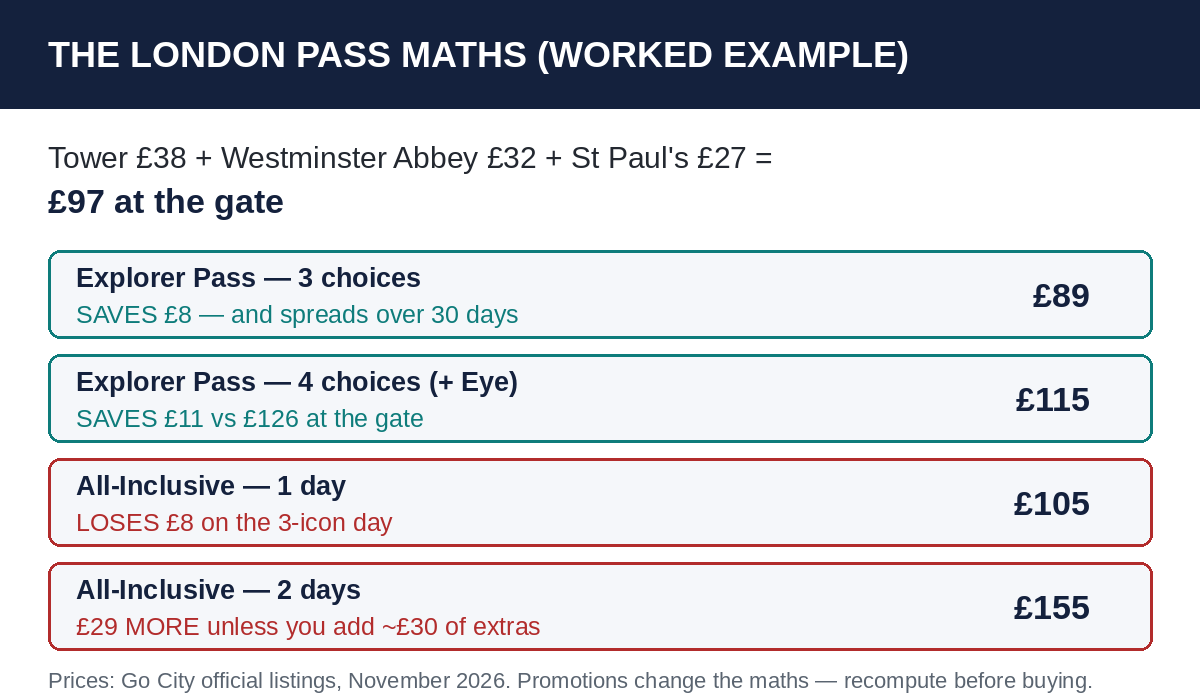
The London Pass (All-Inclusive, by Go City) covers 110+ attractions: 1 day £105, 2 days £155, 3 days £199. The Explorer Pass lets you pick a set number from 75+ attractions, used within 30 days of first visit: 3 choices £89, 4 choices £115 (2 choices £65, 5 £135, 7 £165).
Now the worked example, at the official gate prices above:
- Tower (£38) + Abbey (£32) + St Paul’s (£27) = £97 at the gate.
- Explorer 3-choice (£89) covers exactly those three → saves £8, and you can spread them across days.
- Add the Eye (from £29): gate total £126 vs Explorer 4-choice (£115) → saves £11.
- All-Inclusive 1-day (£105) vs the same three icons in one day (£97): the pass loses £8. It only wins if you cram all four (£126) into a single punishing day.
- All-Inclusive 2-day (£155) vs the four attractions at gate prices spread over two days (£126): the pass costs £29 more — unless you add at least ~£30 of extra gate value (Tower Bridge, Windsor Castle, the included hop-on hop-off days).
The verdict: because London’s greatest museums are free, the All-Inclusive pass is a product most budget visitors should not buy — it’s engineered for travellers doing four-plus paid attractions a day. The Explorer Pass is the defensible buy, and only if you’re certain you’ll visit at least three of the big paid icons. Go City runs frequent promotions, so re-run this maths with the prices on the day you buy. (One coverage question we could not resolve from official pages: whether Madame Tussauds is currently included in the London Pass — listings conflict, so don’t buy the pass counting on it.)
Getting around: the cap does the saving
Use contactless or Oyster and Transport for London caps your spending automatically: Zones 1–2 pay-as-you-go is capped at £8.90 per day (£44.70 across a Monday–Sunday week). Tap the same card or device for every journey so the cap tracks you, and if you’re visiting from the US, use a card without foreign-transaction fees — the cap can’t protect you from your own bank. For almost every visitor itinerary, the Tube-plus-walking beats any sightseeing bus on cost.
Timing: the other budget
Money is only half the budget — timing is the rest. The free museums’ slots and the Sky Garden’s tickets are released well ahead and disappear first at weekends and school holidays, so the order of operations for a budget London trip is: fix dates → book free museum slots and Sky Garden (three-week window) → decide on paid icons → only then run the pass maths with live prices. Inside the attractions, the same principle applies in miniature: the Tower of London at opening time gives you the Crown Jewels before the tour groups; the London Eye at dusk costs the same as at noon but photographs twice as well; and the big museums are at their calmest in the first and last hours of the day. None of that costs a penny — it just has to be planned before the spontaneous travellers wake up.
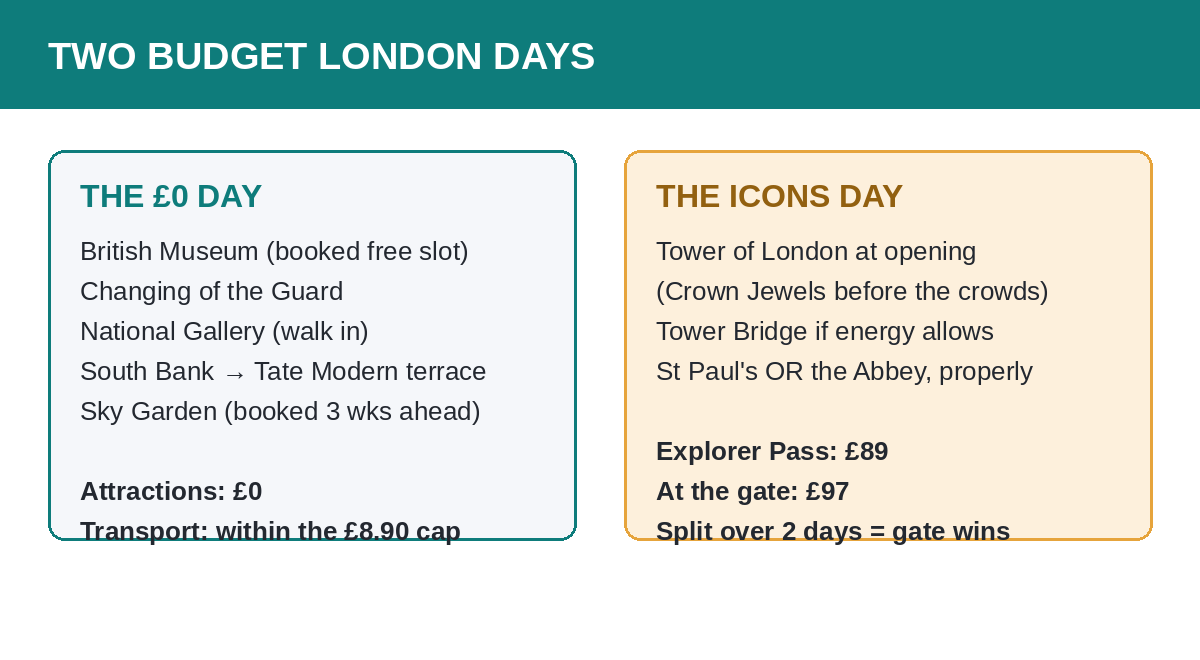
Two sample budget days
The £0 day (plus transport): morning at the British Museum (free slot booked), Changing of the Guard en route to the National Gallery (walk in), a South Bank walk past Tate Modern (free, with the Level 10 terrace at golden hour). If you booked three weeks out, finish at the Sky Garden. Total attraction spend: £0; transport within the £8.90 cap.
The icons day (£89–£97): Tower of London first (arrive at opening for the Crown Jewels before the crowds), Tower Bridge if energy allows, then St Paul’s or the Abbey — not both at full attention. On an Explorer Pass this day costs £89; at the gate £97; and splitting the icons across two days costs the same at the gate, so the pass’s £8 saving is really buying you flexibility. (If a mystery trip is more your style, our Wowcher Mystery Holidays explainer shows what the £99 version of a city break really involves.)
Frequently asked questions
Are London’s museums really free?
The permanent collections of the British Museum, National Gallery, Tate Modern, V&A, Natural History Museum and Science Museum are free. Special exhibitions charge. Entry policies differ: the Science Museum requires a free pre-booked ticket; the British Museum and Natural History Museum strongly advise one; the V&A and Tate Modern are walk-in.
Is the London Pass worth it?
For most budget visitors, no — the worked example in this guide shows the 1-day All-Inclusive pass (£105) losing money against three icons at gate prices (£97). The Explorer Pass (3 choices, £89) saves a modest £8–£11 if you’ll definitely visit three or four major paid attractions. Promotions change the maths; recompute before buying.
Is it cheaper to book London attractions on Viator or direct?
Usually similar or slightly more on Viator in exchange for free cancellation on many products — its standard line allows cancellation up to 24 hours ahead for a full refund. Viator’s standout budget product is different: guided tours of free venues, like the British Museum tour from $13, where you’re buying expertise rather than entry.
How much does the Tower of London cost in 2026?
£38.00 per adult on Historic Royal Palaces’ official pricing (£41.80 with the optional donation), £19 for children 5–15. Some third-party pages still show the older £37 tariff.
What’s the cheapest way to get around London as a visitor?
Contactless or Oyster with daily capping: Zones 1–2 travel caps at £8.90 a day, provided you tap the same card or device throughout. Walking between the central sights covers more than visitors expect.
Are free walking tours in London really free?
They’re tip-based: no upfront price and free reservation, with the guide paid from tips at the end. Budget a fair tip — it’s the guide’s income. Operators include Strawberry Tours and Free Tours by Foot; they’re booked direct, not via Viator.
Sources and how we checked
Museum entry policies are quoted from the official sites of the British Museum, National Gallery, Tate, V&A, Natural History Museum and Science Museum. Paid-attraction prices are from Historic Royal Palaces (Tower of London), Westminster Abbey and St Paul’s official pages, and official London Eye/Merlin ticketing (from-prices are dynamic and date-based). Viator products and from-prices are as displayed on viator.com and its budget collection in November 2026 (USD as displayed; check the badge on each product for cancellation terms). Pass prices and the worked example use Go City’s official London Pass and Explorer Pass listings. Transport caps are from Transport for London’s official fares pages. Unresolved items are stated in the text: Madame Tussauds’ current pass coverage, and exact single-date London Eye pricing, which is dynamic.